How it’s painted
A painting algorithm, written for one job.
ChessFlow’s paintings are made by software we wrote for this and nothing else. It is not generative AI: no model was trained on anyone’s art, and nothing is invented. It is not a filter over a diagram. And it is not painted by hand; we would rather tell you that than let you assume it.
It follows one rule, very patiently: the picture is made from the moves of the game, and from nothing else.
- 1
It reads the game
The algorithm replays every move on a real board, so it knows which piece moved, where from and where to, what was captured, and when a king was in check. A game it cannot replay legally is refused rather than painted wrong.
- 2
It decides what matters
It edits. Every move is ranked: captures, checks, promotions and the closing moves count most, and checkmate most of all. A handful of moves will carry the picture and the rest stay quiet, which is why a long game does not turn into a tangle.
- 3
It draws the whole game
In Gesture every move is first a charcoal line, from the square a piece left to the square it reached, pressed harder for the moves that mattered more. A knight gets a bowed line.
- 4
It brushes in the deciding moves
A few pale washes come next, for the moves just below the deciding ones. Then the moves that decided the game go over the drawing in ink. A stroke is not a line with a texture on it: the algorithm drags a brush of many bristles, so the ink thins and breaks up as the brush runs dry, and it lies darker where the brush left more of it. The wider the stroke, the heavier the piece.
- 5
Or it cuts the game into shapes
Sails and Facets are painted flat, the way a gouache is. In Sails each deciding move is a sail of colour, and where two cross the colours deepen; in Night the sails are light, and they brighten where they cross. In Facets the deciding moves cut the board into planes; the planes they were played along take colour, the rest stays bare paper, and whoever won holds the larger part.
- 6
It sets the words in type
The title, the players and the move list are typeset, not painted, so they stay sharp and readable at any size. You can change every word, or leave the sheet without any.
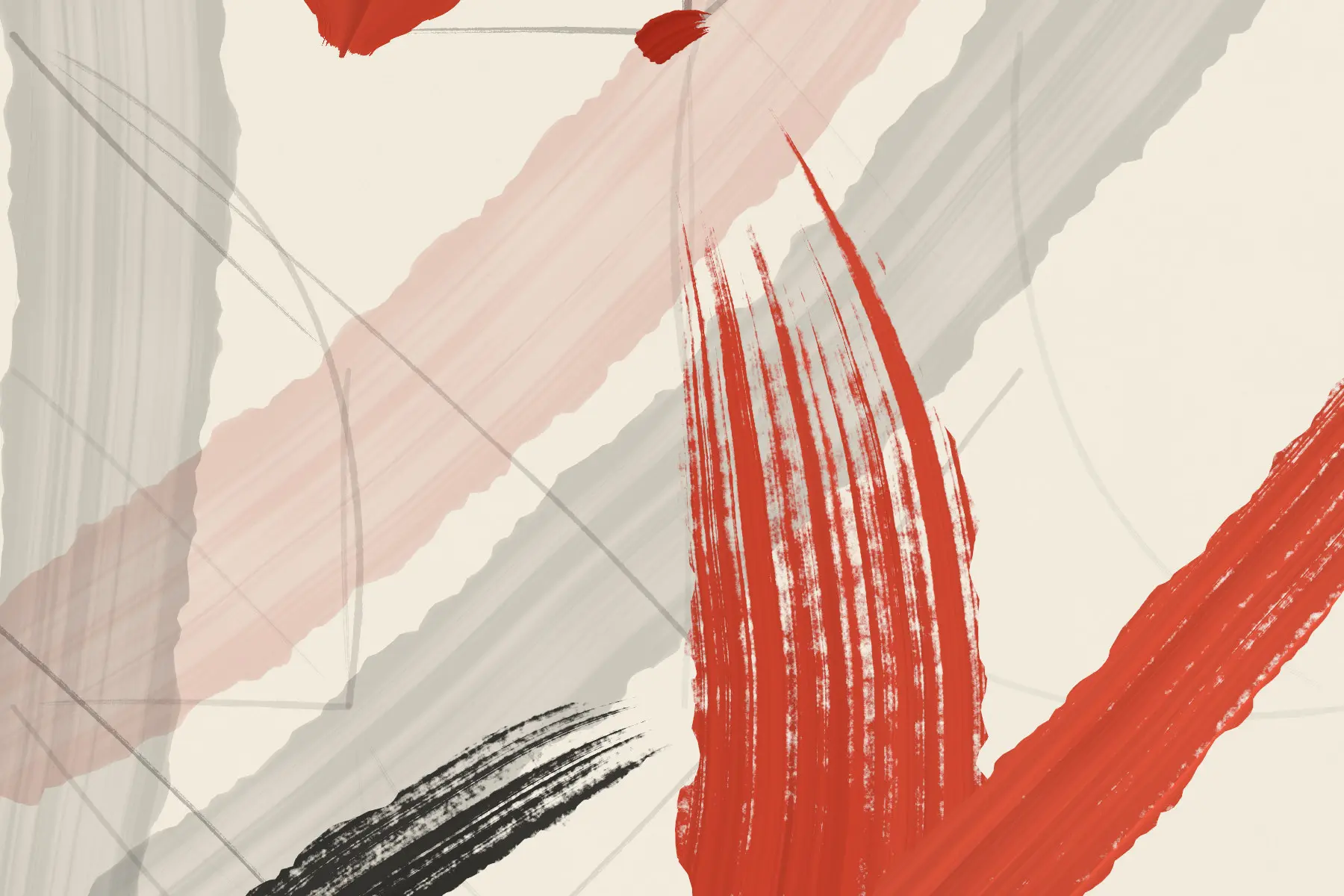
The same game always gives the same painting.
Nothing is left to chance and nothing is generated. Give the algorithm the same game twice and you get the same picture, stroke for stroke. A different game gives a different picture.
The file we send to print has 300 dots per inch: a 40 × 50 cm print is painted at 4800 by 6000 pixels, so the bristle marks and the fine lines hold up when you stand close.
Three styles, tested for every game.
A style is a way of reading the game: which moves carry the picture and how they are painted. Each one comes in two to four sets of colours, and every set is tested for contrast, including for colour-blind eyes, so it reads clearly for every game.
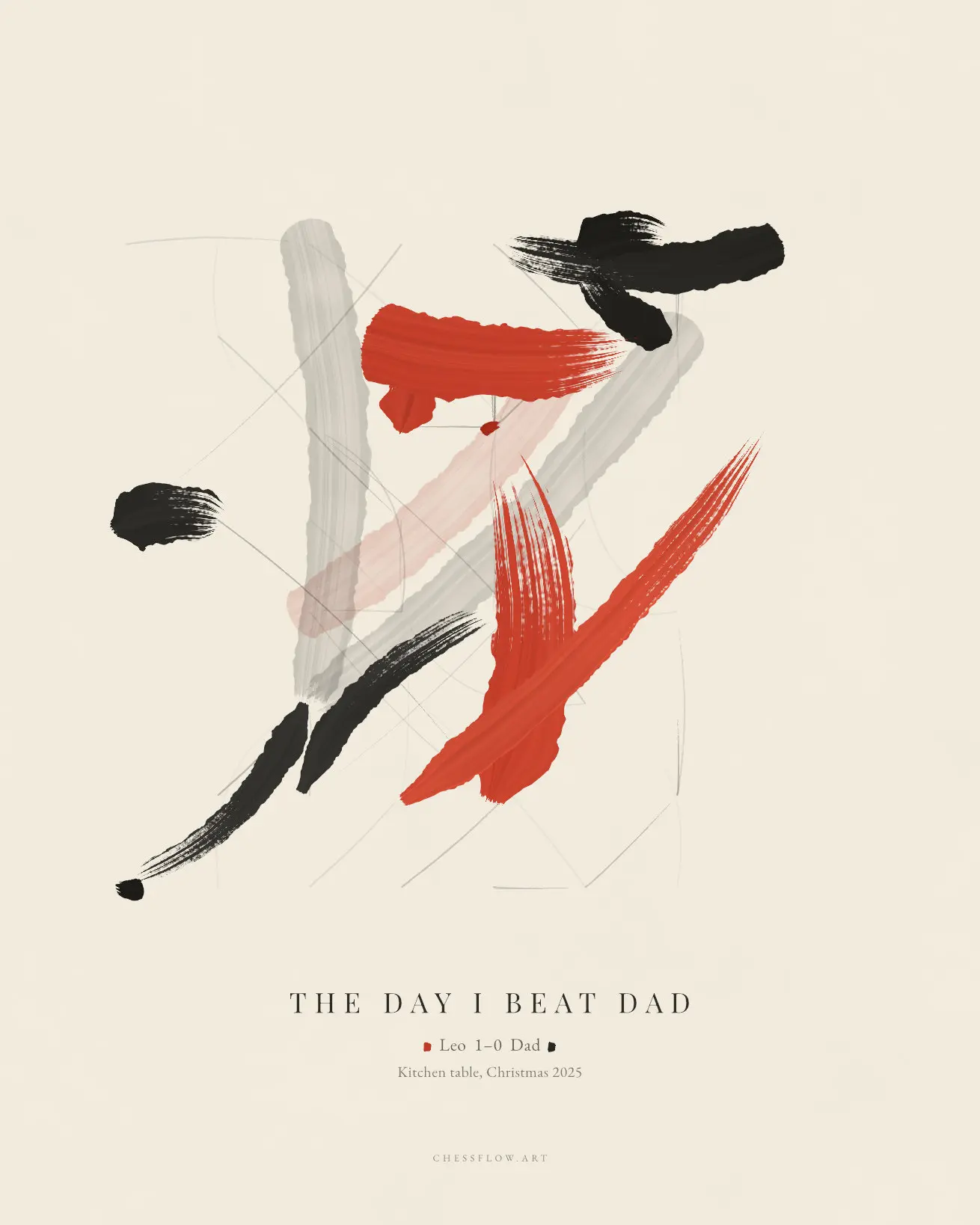
Gesture
The whole game drawn in charcoal, and the moves that decided it brushed over the drawing in ink and wash. The wider the stroke, the heavier the piece.
4 sets of colours: Ink, Chalk, Riviera, Earth.
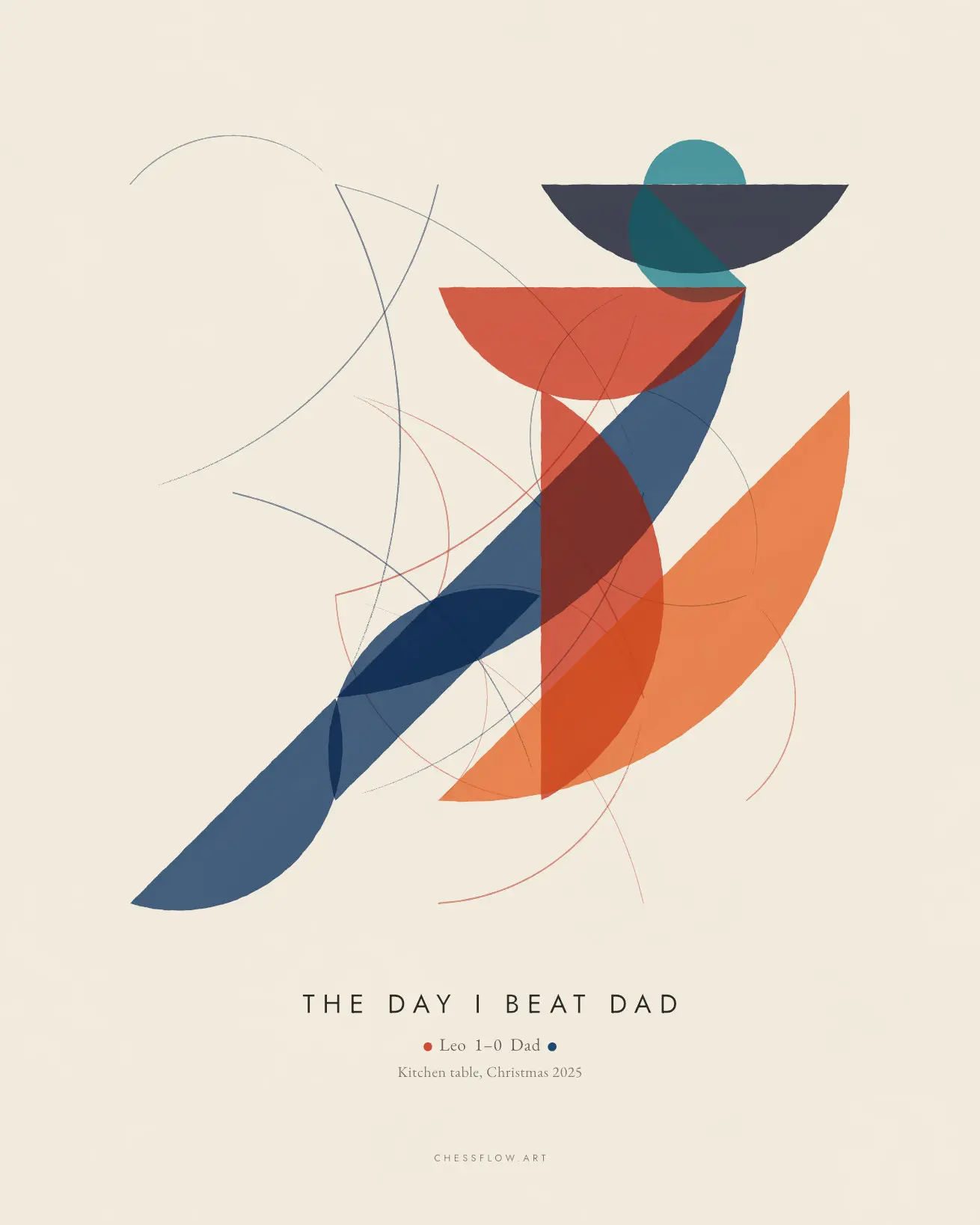
Sails
Each move that decided the game is a sail of colour, and the quiet moves that counted most are fine threads. Where two sails cross, the colours deepen.
3 sets of colours: Riviera, Earth, Night.
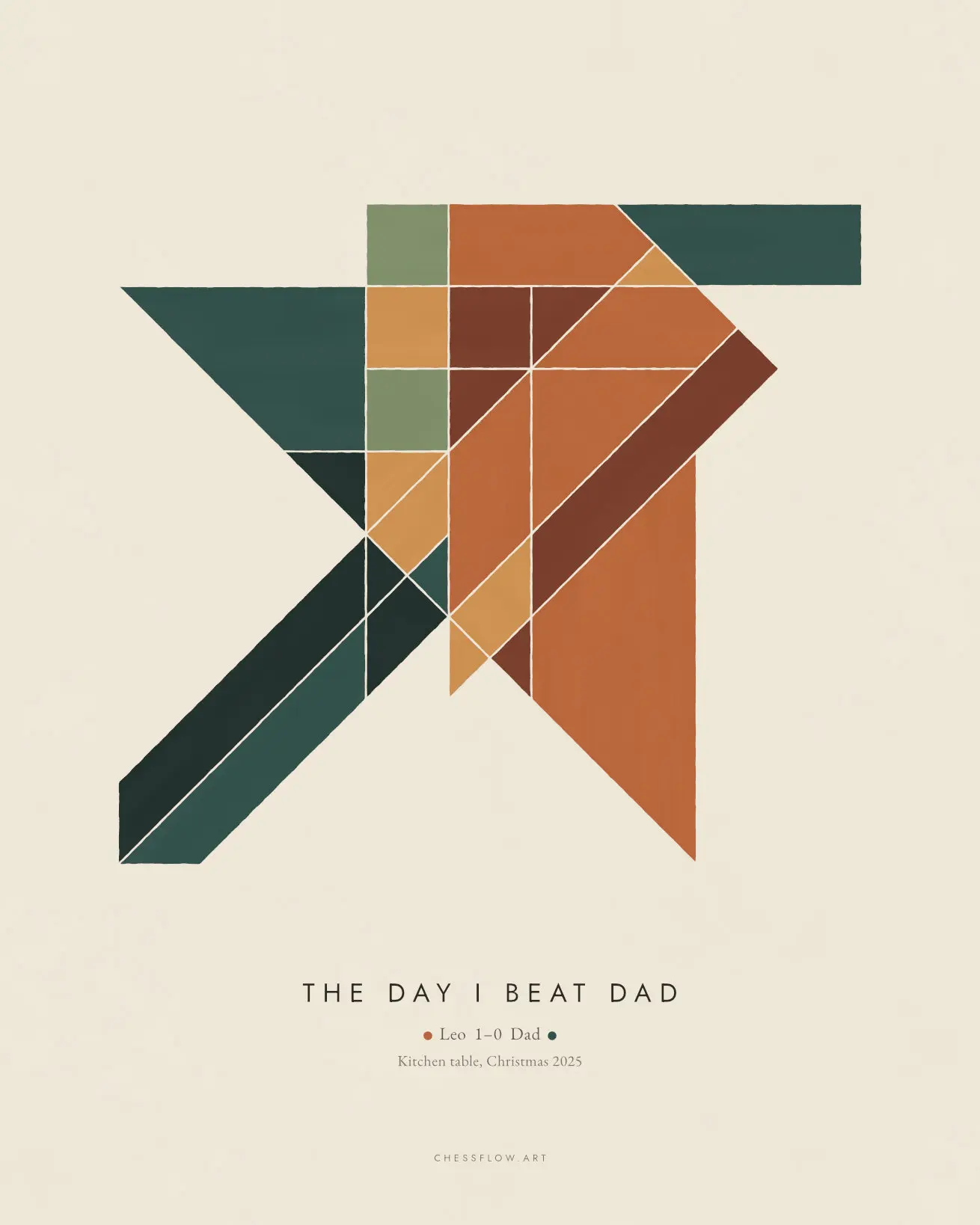
Facets
The moves that decided the game cut the board into planes, and the planes they were played along take colour. Whoever won holds the larger part.
2 sets of colours: Earth, Riviera.
Then it is printed.
The painting is printed flat on canvas or paper by Printful, a print workshop with sites in Europe and North America, and sent from a site near you where possible. The relief you see is in the picture, not on the surface: run a finger over the print and it is smooth.